

SOUTHWEST BY SOUTHWEST: A JOURNEY THROUGH A PALIMPSEST OF HISTORY
October 16-31, 2027
SOUTHWEST BY SOUTHWEST is a journey through a palimpsest of history, a landscape in which successive cultures and ways of life have left their marks without completely erasing what came before. From the ancient Mediterranean worlds of Tartessos, Phoenicians, Greeks, and Romans to Al-Andalus and the Christian kingdoms that followed; from the Atlantic voyages that connected Iberia to the Americas to the enduring cultural landscapes of Spain and Morocco, we will explore how history accumulates and continues to shape the present.
This is also a journey across moving frontiers. Rather than imagining borders as fixed lines, we will encounter them as places of exchange, encounter, conflict, adaptation, and cultural transformation. In many ways, these histories resonate with the borderlands of the U.S. Southwest and northern Mexico, the region that the Southwest Center has long explored as its own kind of palimpsest.
Along the way, we will experience this history not only through monuments and museums, but through landscapes, architecture, music, horses, agriculture, markets, and, of course, food. The journey is designed to be intellectually rich while remaining deeply sensory: a way of encountering the Southwest's larger historical world through the places where those histories are still alive.
The dates are now confirmed, and we are continuing to fine-tune the itinerary for this extraordinary journey across southern Spain and Morocco.
Questions? cquinteroh@arizona.edu
THE JOURNEY, AN ITINERARY:
Our adventure will take us from Madrid to Córdoba, Sevilla, Granada, and the Atlantic coast of Andalusia, then cross into Morocco and continue through Fès, Marrakech, and Azemmour to Casablanca.
Madrid → Córdoba
You will arrive in Madrid at your own convenience, where we will gather for introductions and an orientation to the journey ahead. The following day, we will board Spain's high-speed train for Córdoba, where we will spend two nights exploring one of the great intellectual and cultural centers of the medieval Mediterranean.
Here we will encounter the splendor of the Umayyad Caliphate, the extraordinary legacy of Al-Andalus, and the Roman foundations that preceded it. We will explore the Mezquita-Catedral, the city's historic quarters, its gardens and water systems, and the complex history of Muslims, Christians, and Jews who shaped—and contested—this remarkable urban landscape.
Image

Córdoba → Sevilla
We will travel by train to Sevilla, where we will spend five nights and use it as our base for exploring western Andalusia.
Sevilla lets us move between many layers of history: the ancient Mediterranean world, Islamic Al-Andalus, the Christian kingdoms of the Reconquista, and the Spanish empire that followed 1492.
We will explore the city's extraordinary architecture and gardens, its Jewish heritage, and its connections to the Almoravid and Almohad worlds. We will also examine Sevilla's central role in administering Spain's conquest and colonization of the Americas.But we will also experience Sevilla as a living cultural landscape through its music, food, markets, neighborhoods, and everyday life.
Huelva, Doñana & the Atlantic Southwest
From Sevilla, we will venture west toward Huelva and Doñana National Park, where landscape, animals, and human history come together. In Doñana, we will explore the Iberian origins of animals that would profoundly transform the Americas: the horse and cattle that accompanied Spanish expeditions and eventually became the mustang and Criollo cattle of the American Southwest and northern Mexico.
We will also visit La Rábida and the Columbian sites around Palos de la Frontera. Rather than simply retracing the traditional heroic narrative of Columbus, we will use these places to reconsider the first voyage of 1492 and the people, landscapes, technologies, and historical circumstances that made it possible.
Huelva offers another extraordinary window into the region's deeper history: the Rio Tinto mines, where mineral extraction has shaped human settlement and the landscape for thousands of years. Tartessians, Phoenicians, Romans, and later industrial enterprises all left their mark here, making Rio Tinto a remarkable place to think about resources, technology, trade, and environmental transformation long before 1492.
Image

Jerez de la Frontera
A further excursion will take us to Jerez de la Frontera and Cádiz. In Jerez, we will explore the roots of Cabeza de Vaca and the voyage that brought Estevanico to the Americas, while experiencing two of the city’s great cultural traditions: its celebrated wine heritage and its deep equestrian tradition. The vineyards and bodegas of the Jerez region, along with its famous Andalusian horses, offer another way to understand how landscape, agriculture, animal husbandry, and culture have shaped the region over centuries.
From Jerez, we may venture to Cádiz, one of the oldest continuously inhabited cities in Western Europe. Its extraordinary maritime history opens another window onto the ancient Mediterranean and Atlantic worlds—from the Phoenicians and Romans to the voyages that connected Iberia with the Americas.
Granada
Our next stop will be Granada, the jewel of the Nasrid dynasty and the last Muslim-ruled kingdom in Iberia to fall to the Catholic monarchs in 1492. The Alhambra and Generalife will provide an extraordinary opportunity to explore the sophisticated relationships among water, agriculture, architecture, gardens, aesthetics, and power in Al-Andalus.
But Granada will also let us consider what happened to Islamic Spain after 1492, and how memories, practices, people, and knowledge continued to travel even after political control changed hands.
Across the Strait: Morocco
From Málaga, we will fly to Morocco, where the journey takes another important turn.
After spending so much time exploring the Islamic legacy of southern Spain, we will cross into the North African world that was not simply an influence on Al-Andalus, but part of the same broader Mediterranean and Islamic history.
In Fès, we will immerse ourselves in one of Morocco's great historic cities and its extraordinary medina. We will explore Arab-Andalusian architectural traditions, traditional crafts, gardens, markets, music, and food. Fès offers a particularly rich opportunity to experience the continuing vitality of traditions that we have encountered in their Iberian context. Its cuisine itself reflects a mixture of Arab-Andalusian, Amazigh, and Jewish traditions.
From there we will continue to Marrakech, founded by the Almoravids and later transformed under the Almohads. Here we can explore the dynasties whose histories crossed the Strait of Gibraltar and shaped both Morocco and Al-Andalus. The Koutoubia and its gardens provide a particularly evocative connection to Sevilla: the mosque's architecture became a model for the Giralda.
Azemmour: Following Estevanico Home
Our Moroccan journey will culminate in Azemmour, on Morocco's Atlantic coast.
Here we will return to the story of Estevanico/Mustafa al-Azemmouri, the Moroccan who was taken into slavery and eventually became an interpreter, guide, and explorer in the Spanish conquest of North America.
For us, this encounter is particularly meaningful. Estevanico's story connects Morocco, Spain, Mexico, and the American Southwest, challenging the familiar narrative of the Spanish conquest by placing an African and Muslim figure at its center.
Azemmour also gives us another opportunity to think about frontiers: the town experienced Muslim, Portuguese, and Moroccan rule, and its history reflects the fluid and contested character of Atlantic and Mediterranean borderlands.
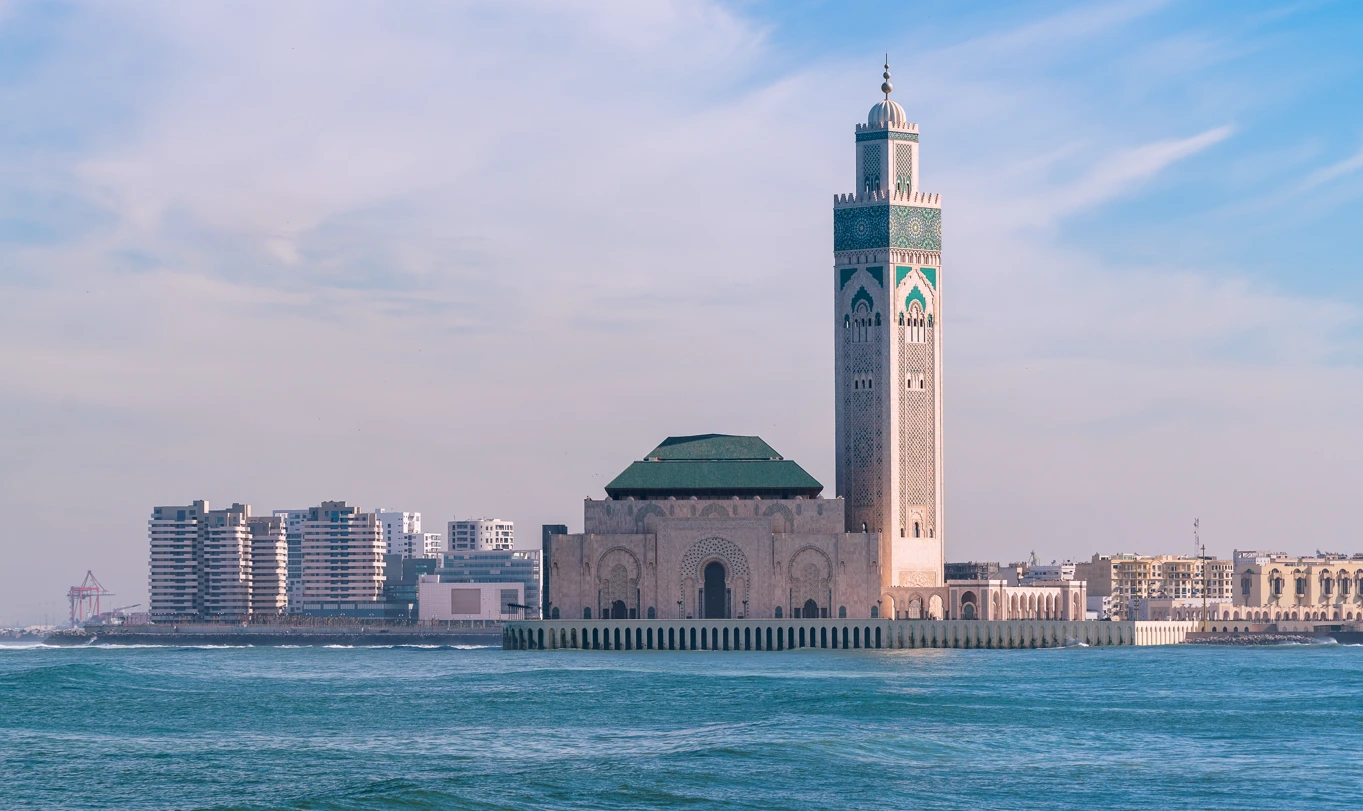
We will end our journey in Casablanca, from where we will depart for home.



These two episodes of In the Americas with David Yetman cover some of the places and topics addressed in the Spanish part of the itinerary:
Also, check out this enlightening presentation about Estevanico by Dr. Hsain Ilahiane, one of our guides in the field.